

Things to Do and Places to Visit Santa Pola Costa Blanca South
EuroTourGuide Coach Tours explains what to do, where to go, what to see, things to do and places to visit in Santa Pola. Don't spend hours copying this text, download it for FREE as a GUIDEBOOK with links to maps by clicking on the PDF below.
Santa Pola is situated just off the N332, only 18 km south of Alicante City and 14 km away from the inland city of Elche. It is a large town with a busy fishing port, a rich history, some 13 kms of coastline and the impressive salt lakes which produce the iconic salt mountains and provide a refuge for the eye catching flamingos. Santa Pola can basically be divided into four zones: the southern area with the rural beaches and salt works, the central area with the marina, port, castle, palm park and market, the northern zone with the coves that join onto the beaches of Gran Alacant and the Island of Tabarca.
The southern zone has the rural beaches of Gola, Pinet and Tamarit with a walking trail that includes the decaying remains of a salt barge and a civil war shelter. These beaches are all unmanaged and back onto the two working salt farms of Bonmati and the larger one of Bras del Port. Both of these farm the lagunas, or salt lakes, that lie either side of the N332. Sea water enters the system of pools and is evaporated by the sun leaving the salt to be harvested and sold for use on icy roads and in products such as dishwasher salt as well as table salt. Lots more information about the industry and the lagunas which are specially protected areas for birds is provided at the free Salt Museum. Beside the lagunas is a pull in viewing area for the lagunas where the Tamarit watch tower is situated. This has been restored and now looks just as it did during the 16th century, when it formed part of a network of towers which were used to warn the locals of an impending attack by pirates. Playa Lissa, also spelt Lisa, is a managed beach and a firm favourite with kite surfers who make the best of the coastal breezes which normally pick up during siesta time at 14:00.
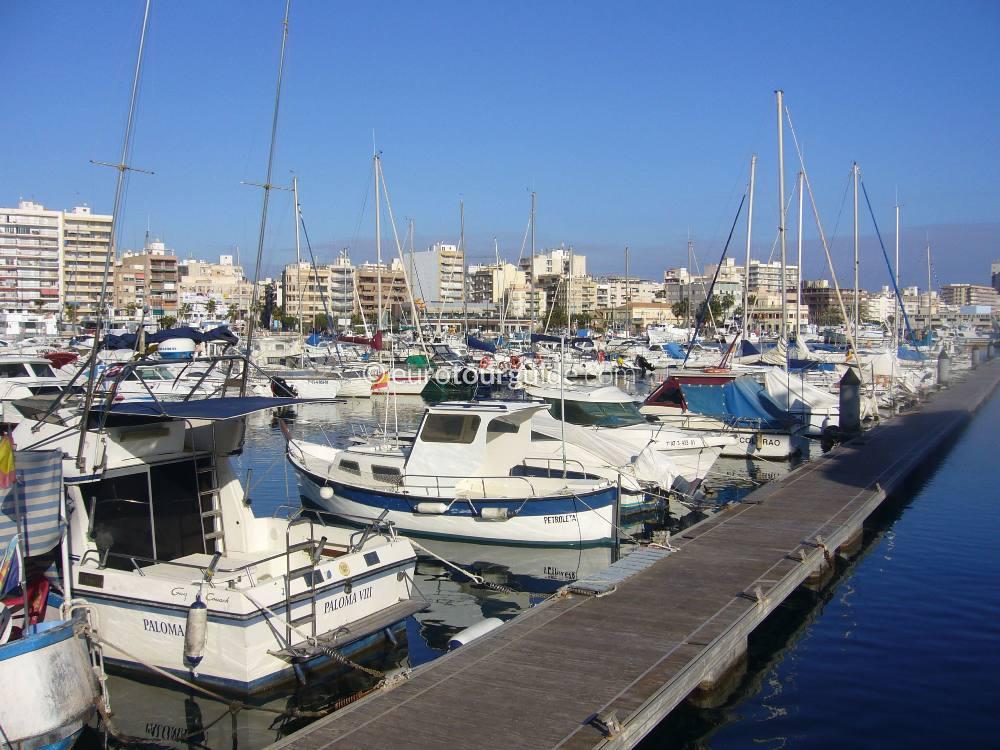
The central zone includes the 1060m long Gran Playa to the south, the marina and port in the middle and the 460m long Playa de Levante to the north. Both of the beaches are wide with fine sand and are backed by part of the 7 km long promenade. The fishing port is one of the busiest in the Mediterranean and you can buy the fresh fish every week day at the little market from 17:30 onwards. The marina is right beside the port and several large and small boats offer daily trips to Tabarca Island from here. The helpful tourist office is located in the town hall, near the port, the Esteban González fishing boat museum and the municipal aquarium. The main streets of the town radiate inland from here, towards the 16th century fortress which houses the fishing and the sea museum and the palm park which contains the bandstand and the remains of a Roman villa. The smaller Monday and larger Saturday morning markets, almost opposite the palm park, are always popular and the Pola Park with its fair ground rides is open everyday during the summer.
The northern zone has the 920m long Calas de Santiago Bernabeu, where the sand is kept in check by the wooden groynes and then the 475m long Playa Varadero. The 7km long promenade continues directly behind these and is a pleasure to amble along. After this the scenic drive north to Gran Alacant begins. The road hugs the rocky shore line, passing the CIMAR marine research facility and during the summer a number of chill out bars, finishing at the little hermitage.
The tiny island of Tabarca at just 1750m long and 300m wide, is one of the top tourist destinations within the Costa Blanca. A visit here is just like stepping back in time, although it can feel quite crowded during the height of summer as over 4,000 people visit it daily! It is about a 30 minute boat journey and several companies operate from the marina. Some boats have glass bottoms, so you can admire the creatures of the deep, whilst others work as a taxi for parties as small as 6 people. Once on the Island you can explore!! There is the central village square, the old fort of which the walls and three of the gates houses still survive, the impressive church, the lighthouse which sits on the uninhabited tip and a museum for information about the history of the island and its roll as a marine reserve. There are also several beaches and coves, some are completely covered in seaweed, others are pebbled and few of the larger ones have sunbeds and sun umbrellas for hire. The island offers great snorkelling, so remember your snorkel & flippers! There are a selection of bars, cafes and restaurants, they are slightly more expensive than usual so you might want to bring your own picnic.
 Download EuroTourGuide Santa Pola.pdf (11.15 MB)